Ceramic decals are also called ceramic transfers, waterslide decals or lithographs. They allow a logo, photograph, illustration or pattern to be moved from transfer paper onto a ceramic surface and then fixed through a compatible firing process. For a studio potter or small brand, they offer a repeatable way to decorate work without hand-painting every mark.

What are ceramic decals?
A ceramic decal is a thin printed design carried on a coated paper backing. When the sheet is wetted, the printed film releases and can slide into position. After the film is smoothed and dried, the piece is fired using the schedule recommended for the decal, ceramic body and glaze.
The result is different from an ordinary sticker. A waterslide ceramic transfer is intended to become part of a fired ceramic finish, not remain as an adhesive surface. The exact durability and suitability depend on the materials and firing conditions.
Types of ceramic decals and transfers
Overglaze or on-glaze decals
Applied to an already glazed surface. This route is often used for full-colour logos, photographs, tableware decoration, mugs and studio pottery.
Underglaze transfers
Applied to suitable bisque or greenware and then covered with a compatible glaze. Colour behaviour is different because the design is enclosed under the glaze.
Inglaze and high-fire transfers
Used when the decoration needs to be integrated into a higher-temperature ceramic process. Confirm the decal, clay body, glaze and kiln before ordering.
Special-effect and relief decoration
Screen-printed, metallic, precious-metal, reactive and relief effects are separate production categories. They require different materials, temperatures and finishing expectations.
What surfaces can ceramic decals be used on?
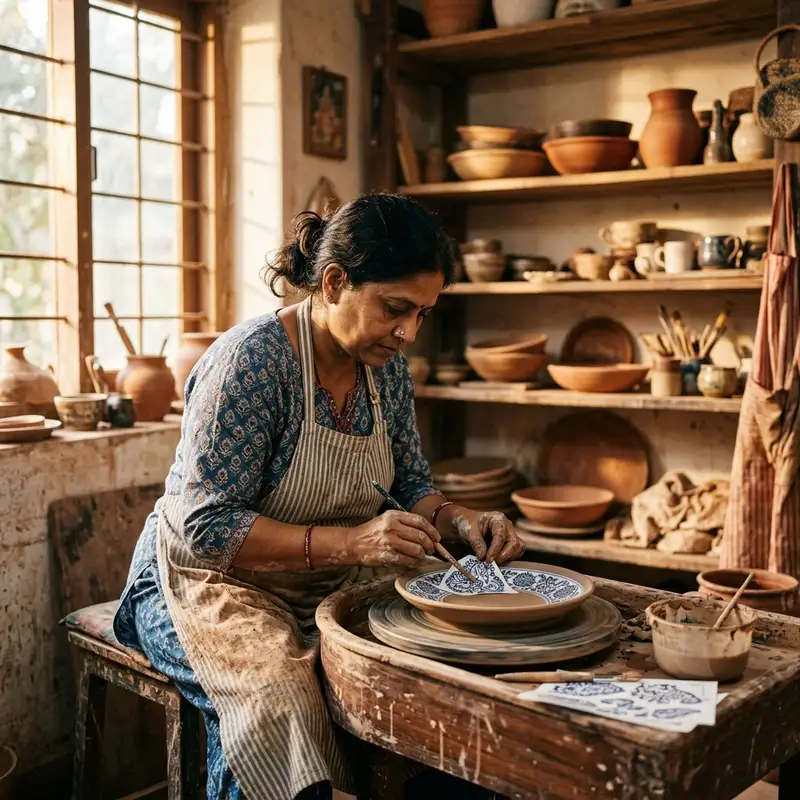
Depending on the decal type, ceramic transfers may be suitable for glazed porcelain, bone china, stoneware, earthenware, ceramic mugs, plates, tiles, vases and other prepared ceramic tableware. Glass and temperature-sensitive substrates require their own compatible transfer and firing route.
The surface matters.
For an overglaze decal, the ceramic surface generally needs to be smooth, clean and already glazed. Rough, dusty, raw or unsuitable surfaces can cause poor adhesion, trapped bubbles or an uneven fired result.
How to apply a waterslide ceramic decal
- 1Prepare a clean, smooth surface and cut close to the design.
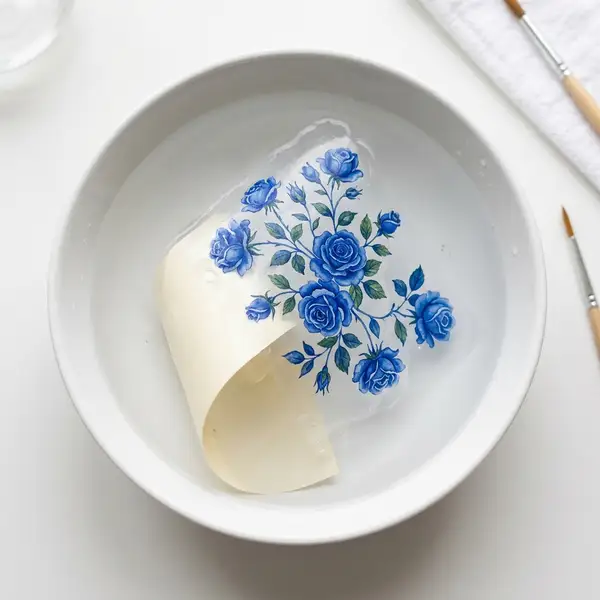
- 2Soak the decal according to the supplied instructions until the film can move on the backing.
- 3Slide the design onto the ceramic and position it carefully.
- 4Use a soft tool or cloth to remove water and air bubbles without damaging the film.
- 5Let the decal dry completely before firing. Do not rush the drying stage.
- 6Fire using the recommended schedule for the decal and your ceramic surface.
Firing ceramic decals
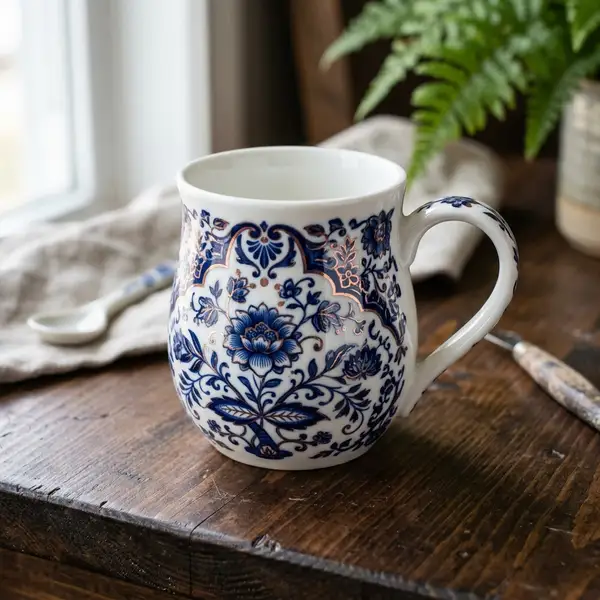
A firing schedule is not universal. Overglaze ceramic decals are commonly associated with approximately 780–850°C, while underglaze and higher-fire transfers may require approximately 1150–1250°C. Use the supplier’s instructions and consider the clay body, glaze, kiln ramp, peak hold and cooling cycle.
Test firing is important because colour, glaze chemistry, surface texture and thermal behaviour can change the result. A digital proof can show layout and artwork, but it cannot guarantee the exact fired appearance on every glaze.
Custom ceramic decal printing in India
Ceramic Decals India helps potters, ceramic artists, cafés, restaurants, hotels and small brands prepare artwork for printed ceramic transfers. Logos, illustrations, photographs and repeated patterns can be arranged on a sheet before a digital proof is approved.
For a single A4 sheet, the price is ₹1,000. A3 production pricing is ₹2,000 per sheet for 1–5 sheets, ₹1,800 for 6–20, ₹1,500 for 21–50, and custom quote for 50+ sheets. GST, artwork preparation and courier charges are confirmed separately where applicable.
Food-contact and dishwasher questions
Food-contact suitability cannot be decided from the word “ceramic” alone. It depends on the decal material, ceramic body, glaze, placement, firing schedule and finished piece. For plates, mugs and other food-contact surfaces, test representative finished pieces and request the supporting information needed for your use case before commercial production.
Frequently asked questions
What are ceramic decals?
Ceramic decals are printed designs on transfer paper. The design is soaked, slid onto a suitable ceramic surface, dried, and fired so the ceramic colour layer bonds to the surface or glaze.
What is the difference between overglaze and underglaze decals?
Overglaze decals are applied to an already glazed surface and commonly fired at a lower decal-firing range. Underglaze transfers are applied to suitable bisque or greenware, covered with a compatible glaze, and fired with that glaze.
Can ceramic decals be used on mugs, plates, tiles and pottery?
They can be suitable for compatible glazed mugs, plates, tiles, porcelain, stoneware and earthenware. The exact surface, glaze, placement and firing schedule should be confirmed before production.
Are ceramic decals food safe?
Food-contact suitability depends on the decal material, ceramic body, glaze, placement and complete firing process. Test finished pieces and obtain the supporting information needed for your intended use before commercial sale.
How much do custom ceramic decals cost in India?
A single A4 sheet is ₹1,000. A3 production is ₹2,000 per sheet for 1–5 sheets, ₹1,800 for 6–20, ₹1,500 for 21–50, and custom quote for 50+ sheets.